
Thinking about owning a property in Thailand? From beachfront condominiums in Pattaya to luxury villas in Phuket, Thailand offers various opportunities for international buyers.
But what can foreigners legally own? Here’s a quick guide to getting started.
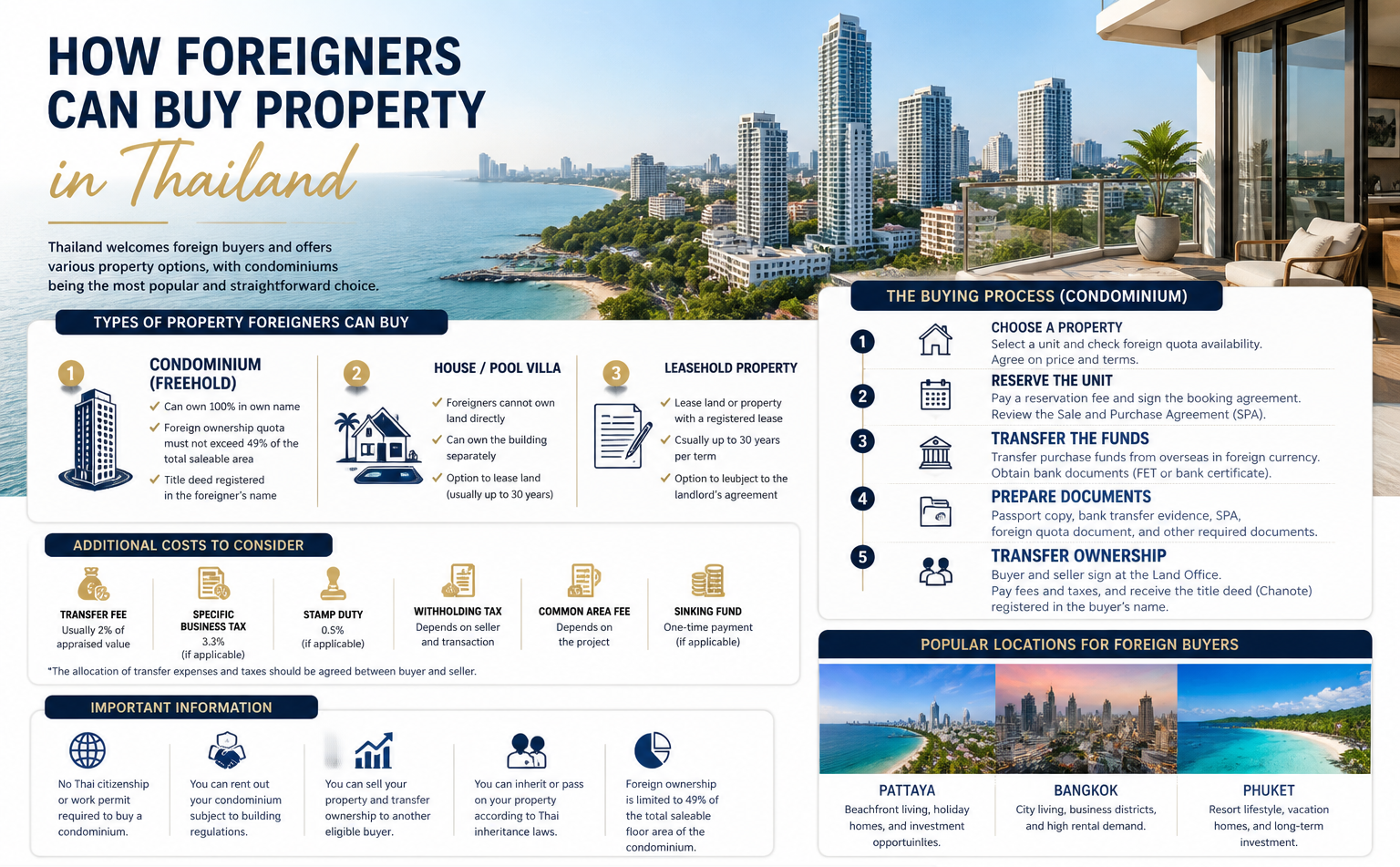
Condominium – Freehold
Foreigners can own a unit in their own name.
Foreign ownership is limited to 49% of the building’s total saleable floor area.
No Thai partner required.
House & Pool Villa
Foreigners generally cannot own land directly.
Building ownership may be possible separately from the land.
Registered leasehold is another option.
Leasehold
Generally up to 30 years per registered lease term.
Renewal arrangements are subject to legal requirements.
Five simple steps:
Choose a Property – Find a unit with available foreign quota.
Reserve Your Unit – Pay the reservation fee and review the contract.
Transfer Funds – Send the purchase money from overseas in foreign currency.
Prepare Documents – Passport, bank transfer evidence, and purchase agreement.
Transfer Ownership – Register the property at the Land Office.
| Expense | General Rate |
|---|---|
| Transfer Fee | 2% |
| Specific Business Tax | 3.3%, if applicable |
| Stamp Duty | 0.5%, if applicable |
| Withholding Tax | Depends on seller |
Other costs may include common area fees and a sinking fund.
Pattaya: Beachfront living and condominium investments.
Bangkok: City lifestyle and convenient urban living.
Phuket: Tropical living and luxury villas.